


Sunlight PC Endurance Board
Contact Info
- Add:中国(河南)自贸试验区, Zip: 450000
- Contact: 孙经理
- Tel:0371-22025855
- Email:yongxinbanye@163.com
Other Products


What are the specific requirements for screws during the installation of polycarbonate sheets?
First, when installing polycarbonate sheets, the distance between the screw holes and the edge of the sheet should not be too close. If the distance is too close, it may cause damage to the sheet. To ensure the integrity of the polycarbonate sheet, it is essential to maintain an appropriate distance between the screw holes and the sheet edge. Additionally, the tightness of the screws must be controlled to avoid issues such as the sheet falling off due to looseness or deformation due to overtightening.
Secondly, attention should be paid to the selection of screw types during the installation of polycarbonate sheets. Self-tapping screws are recommended, as other types may lead to gradually increasing stress. Paying attention to this aspect is highly beneficial for improving the installation quality of polycarbonate sheets, which will also prove valuable during their later use.
The specific requirements for screws during the installation of polycarbonate sheets depend on the thickness of the sheets. Adjustments should be made to the distance between screws and the distance between screws and the sheet edge accordingly. Excessive spacing may compromise the stability of the polycarbonate sheet and the overall structure. The size of the screws, as well as seasonal and temperature changes, can also affect the stability of the polycarbonate sheet. The above are some of the requirements for screws during the installation of polycarbonate sheets. Various aspects of the screws can impact both the polycarbonate sheet and the entire building. To ensure the quality of the construction project, it is necessary to pay attention to the requirements of polycarbonate sheets for screws.
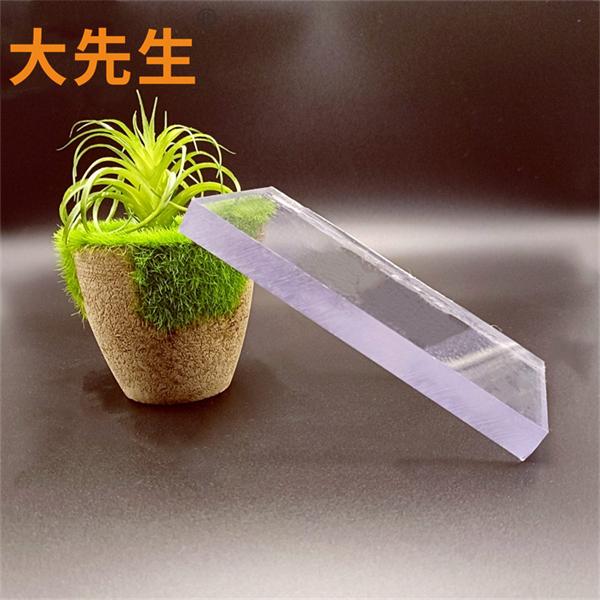
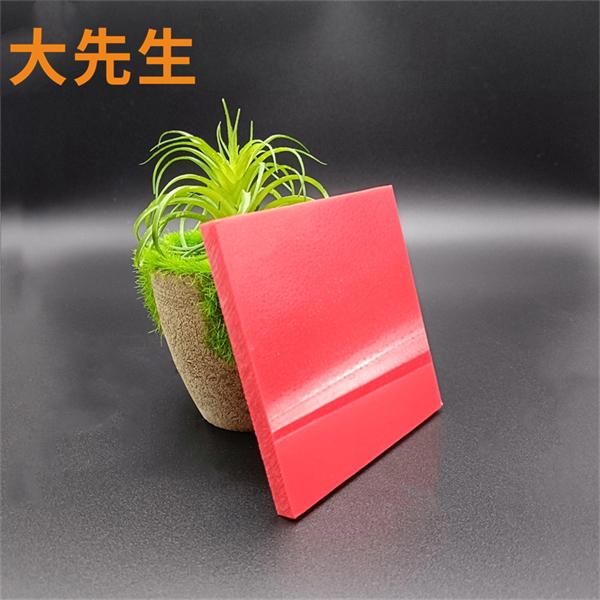
Sunlight Panel Product Characteristics:
(1) Light Transmittance: PC sunlight panels have a light transmittance of up to 89%, comparable to glass. UV-coated panels are resistant to yellowing, fogging, and reduced transmittance when exposed to sunlight. After ten years, the light transmittance loss is about 10%, while PVC panels lose 15–20%, and fiberglass panels lose 12–20%.
(2) Impact Resistance: The impact strength is 250–300 times that of ordinary glass, about 30 times that of acrylic sheets of the same thickness, and 2–20 times that of tempered glass. They are known as "unbreakable glass" and "resonant steel."
(3) UV Protection: One side of the PC panel is co-extruded with an anti-UV coating, while the other side has an anti-condensation treatment, combining UV resistance, heat insulation, and anti-fogging functions. It blocks UV rays, making it suitable for protecting valuable artworks and exhibits from UV damage.
(4) Lightweight: The specific gravity is about half that of glass, reducing costs for transportation, handling, installation, and support frameworks.
(5) Flame Retardancy: According to the GB50222—95 standard, PC sunlight panels are classified as flame-retardant (B1 grade). The self-ignition point of PC panels is about 580°C, and they self-extinguish after being removed from the flame. They do not produce toxic gases when burning and do not contribute to the spread of fire.
(6) Bendability: They can be cold-bent on-site according to design drawings to form arches, semi-circular roofs, and windows. The minimum bending radius is about 175 times the panel thickness. They can also be heat-bent.
(7) Sound Insulation: PC sunlight panels have significant sound insulation effects, outperforming glass and acrylic sheets of the same thickness in acoustic insulation. Under the same thickness conditions, the sound insulation of PC sunlight panels is 5–9 dB higher than that of glass, making them an ideal material for highway sound barriers.
(8) Energy Efficiency: They keep interiors cool in summer and warm in winter. PC sunlight panels have a lower thermal conductivity (K-value) than ordinary glass and other plastics, with heat insulation effects 7–25% higher than glass of the same thickness. The heat insulation of PC sunlight panels can reach up to 49%, significantly reducing heat loss, making them suitable for buildings with heating systems.
(9) Temperature Adaptability: PC panels do not become brittle at -40°C and do not deform at 125°C. Their mechanical and physical properties remain largely unchanged even in harsh environments.
(10) Weather Resistance: PC sunlight panels maintain stable physical properties within a temperature range of -40°C to 120°C. After 4,000 hours of artificial weathering tests, the yellowing degree is 2, and the light transmittance reduction is about 0.6%.
(11) Anti-Condensation: At an outdoor temperature of 0°C and an indoor temperature of 23°C with relative humidity below 80%, the inner surface of the material does not condense. Condensation flows along the surface of the panel without dripping.
Yongxin PC structural panel categories: General-purpose polycarbonate sheets (single-layer panels), single (double)-sided UV polycarbonate sheets, textured panels, frosted panels, transparent sound barrier panels, scratch-resistant panels, corrugated sheets, general-purpose sunlight panels (multi-layer panels), single (double)-sided UV sunlight panels, crystal-clear panels, anti-drip sunlight panels, easy-clean sunlight panels, anti-drip + easy-clean sunlight panels, sunlight panels, multi-layer sunlight panels, and PC tiles. PC structural panel varieties: General-purpose single-layer panels, impact-resistant panels, transparent sound barrier panels, scratch-resistant panels, and aging-resistant multi-layer sunlight panels. The products are mainly used for ceilings in various building spaces, daylighting greenhouses, sound barriers for highways and railways, thermoformed skylight domes, and more.
| Industry Category | Others |
|---|---|
| Product Category | |
| Brand: | 大先生 |
| Spec: | 1.12 1.56 1.82 2.1 |
| Stock: | 500 |
| Manufacturer: | 定制生产 |
| Origin: | 1141 |


